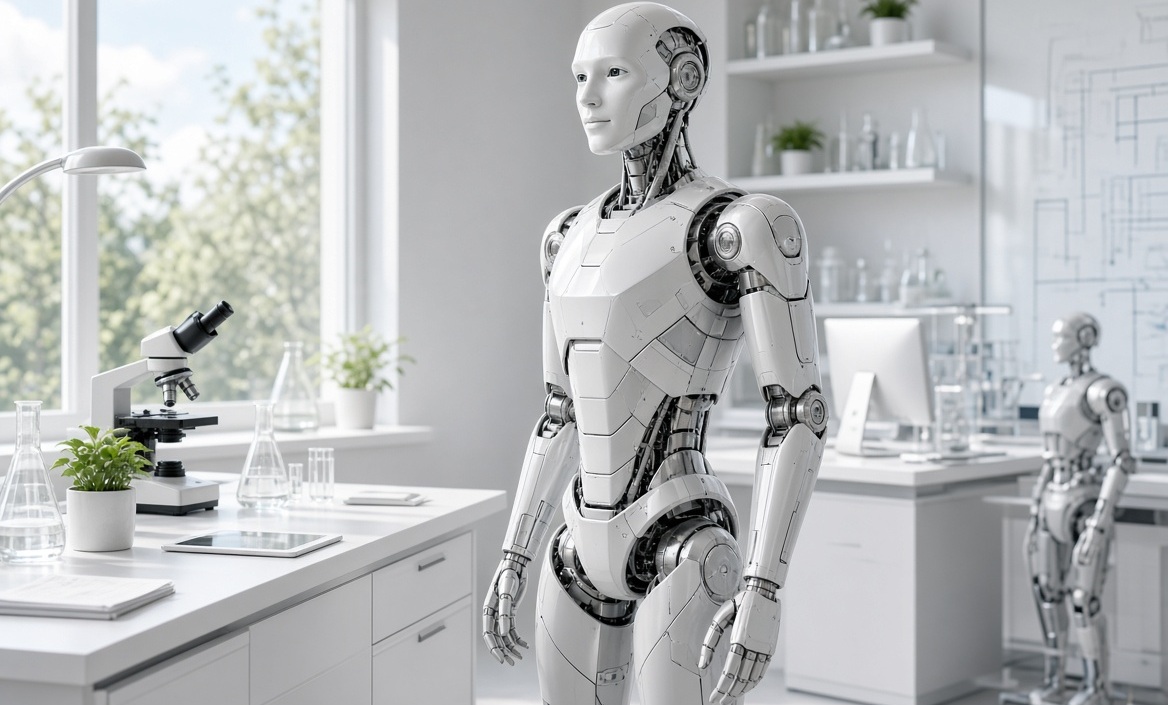
Brain-computer interfaces and humanoid robots raise a question that once belonged mainly to science fiction: could aspects of a person’s mental life one day be represented in a machine or associated with a different body? Elon Musk has discussed Neuralink’s brain-computer interface work alongside broader ambitions for human–AI interaction, and public reporting has described speculative comments about a future mind “snapshot” being associated with a robot such as Tesla’s Optimus.
What Neuralink does today
Neuralink develops implantable brain-computer interface technology intended to record neural activity and translate selected signals into commands for external devices. Early clinical work has focused on enabling people with serious physical limitations to control computer interfaces. These are significant engineering goals, but they are not equivalent to reading a complete mind or copying a person’s subjective experience.
Company information: Neuralink.
What Optimus is designed to be
Tesla has presented Optimus as a general-purpose humanoid robot under development. A robot can provide a physical platform for sensors, software, and actuators, but putting an AI system in a robot does not transfer a human identity into it.
Company information: Tesla AI and robotics.
Mind snapshot versus mind uploading
The phrase “mind snapshot” can sound like a digital copy of a person, but several distinct technical problems are involved: measuring relevant neural states, interpreting memories and personality, modeling brain dynamics, and determining whether a computational representation would preserve personal identity or consciousness. Current brain-computer interfaces do not demonstrate that a complete human mind can be copied into a robot.
What evidence should be checked?
When reporting a statement about a mind snapshot being transferred to Optimus, the ideal source is the complete official event recording or transcript. Secondary reporting can help locate the claim, but an excerpt should not be expanded into a promise that the technology exists today.
Why the idea matters to EGOD.SI
Digital embodiment is relevant to the site’s exploration of AI, power, identity, and the “digital god” metaphor. A future machine that could imitate a person would raise profound questions about identity and control. But the metaphor should remain separate from current capability: Neuralink’s brain-computer interface research, Optimus robotics, and hypothetical mind uploading are related topics, not a single demonstrated technology.