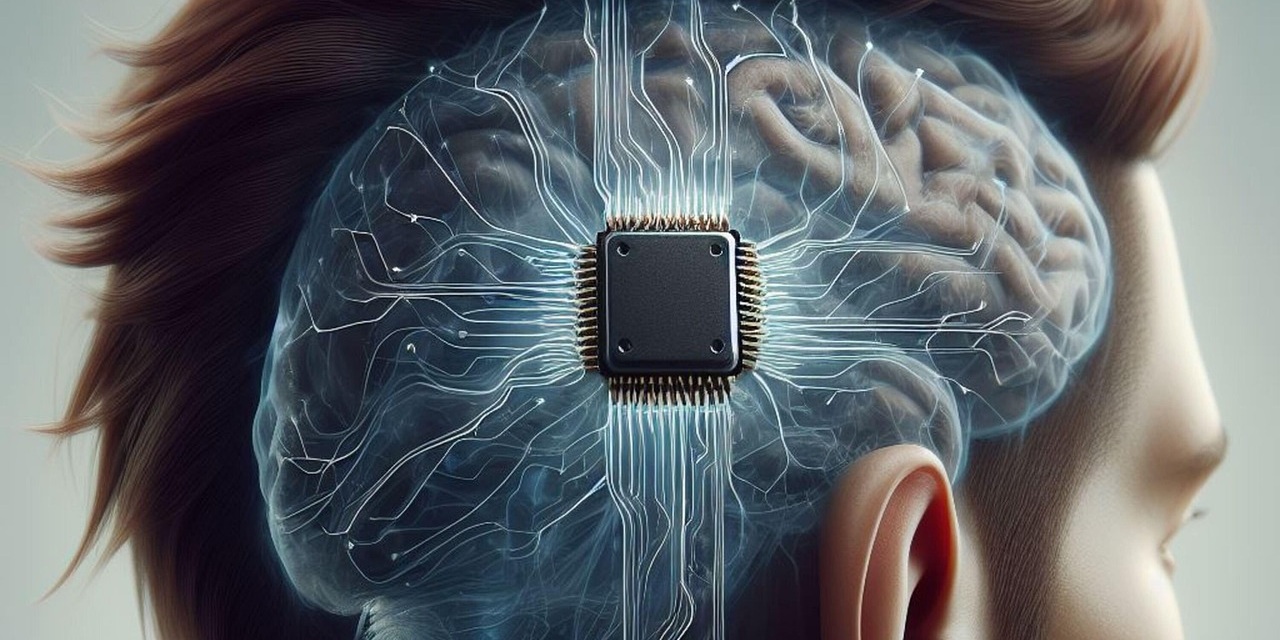
Elon Musk has described brain-computer interfaces as a possible way for humans to interact more directly with digital systems. One recurring argument is that people communicate with computers through relatively slow channels—keyboards, screens, and speech—while AI capabilities continue to grow. Neuralink is presented as one possible route toward a higher-bandwidth connection.
What “symbiosis” means in this context
Human–AI symbiosis can mean several things: using AI tools to extend a person’s abilities, connecting neural signals to a computer, or imagining a much deeper integration between biological cognition and machine systems. These are not equivalent levels of technology. A user controlling a cursor through neural signals is a concrete brain-computer interface application; a seamless fusion of human and machine consciousness remains speculative.
Potential benefits
Brain-computer interfaces may help people with paralysis communicate, control devices, or regain some independence. More capable interfaces could eventually expand the range of tasks that people can perform with assistive technology. These benefits should be evaluated through clinical evidence, safety data, and the experiences of participants.
Unresolved questions
- Safety: implants involve medical risks and require careful long-term monitoring.
- Privacy: neural data raises questions about consent, security, and control over sensitive information.
- Access: cost and availability could affect who benefits.
- Identity: a neural interface does not, by itself, establish that thoughts or consciousness can be transferred into another system.
From technology to the “digital god” metaphor
EGOD.SI may interpret the pursuit of closer human–machine integration as part of a wider cultural shift in which technology appears to extend human powers. That is a philosophical lens, not evidence that Musk intends to create a deity or that an AI system has become supernatural.
The most informative approach is to compare the stated technical goals with the capabilities demonstrated in public clinical results. Aspirations can be reported as aspirations; working capabilities should be supported by verifiable evidence.
Reference: Neuralink’s official website.