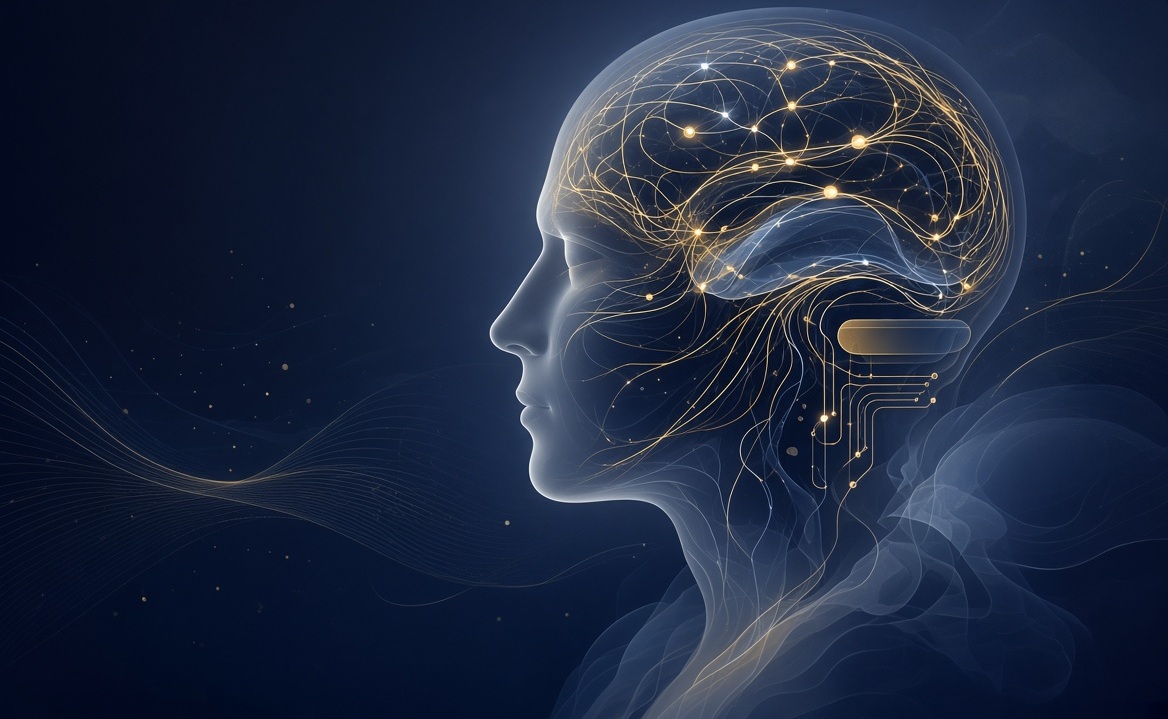
Elon Musk has repeatedly discussed the possibility that reality could be a computer simulation. His comments have helped bring a philosophical argument into mainstream technology debate, but they are best understood as a stated probability judgment rather than a claim that simulation has been scientifically demonstrated.
The 2016 argument: increasingly realistic games
At the 2016 Code Conference, Musk argued that video games had progressed from simple early examples such as Pong toward increasingly detailed, networked virtual worlds. If technological progress continued far enough, he reasoned, simulated environments might become difficult or impossible to distinguish from ordinary experience. He concluded that the odds of living in “base reality” were extremely low—“one in billions.”
The important distinction is between the premise and the conclusion. The premise is that computing and simulation technology may improve. The conclusion—that our own reality is therefore likely simulated—depends on additional assumptions about how many simulations would be created, whether conscious observers could exist in them, and how likely it is that we occupy one.
Reference: contemporaneous coverage of the Code Conference 2016 remarks (e.g. Ars Technica, The Verge, Vox reporting of the full argument).
The connection to Nick Bostrom
The modern simulation argument is often associated with philosopher Nick Bostrom’s 2003 paper, “Are You Living in a Computer Simulation?” Bostrom did not simply prove that we live in a simulation. His argument presents a set of possibilities concerning the future of technologically mature civilizations, their use of computing resources, and the existence of conscious simulated observers.
Reference: Nick Bostrom, “Are You Living in a Computer Simulation?”.
Later restatements
Musk returned to the theme in later interviews (including the Joe Rogan Experience in 2018 and a 2025 conversation with Nikhil Kamath). He has continued to frame the idea in probabilistic terms—“pretty high” chance, “a good chance we’re in a simulation, not that we’re definitely in one”—and has linked it to the rapid advance of photorealistic games and AI characters.
What the argument does—and does not—establish
There is no generally accepted experiment that has established that our universe is a simulation. The hypothesis raises questions about consciousness, computation, physics, and the limits of observation, but a compelling philosophical argument is not the same as empirical confirmation.
- Documented: Musk has publicly expressed the view that a simulated reality is plausible or likely.
- Reasoning offered: Future simulated worlds might become extremely realistic, if technological progress continues.
- Not established: That our universe is simulated, that a particular company has discovered evidence of it, or that any current AI system controls the underlying reality.
Why this matters for EGOD.SI
For EGOD.SI, simulation theory provides a factual starting point for exploring the cultural overlap between AI, virtual worlds, digital identity, and the idea of artificial creators. That overlap is intellectually interesting without requiring the site to assert that a hidden plan exists. The strongest analysis keeps Musk’s public statements separate from the broader interpretations readers may draw from them.