EGOD.SI investigates the cultural overlap between artificial intelligence, robotics, digital identity, simulation language, and the long history of ideas about gods, power, and embodiment. The project’s value depends on keeping three levels of analysis clearly separated.
1. Verified facts
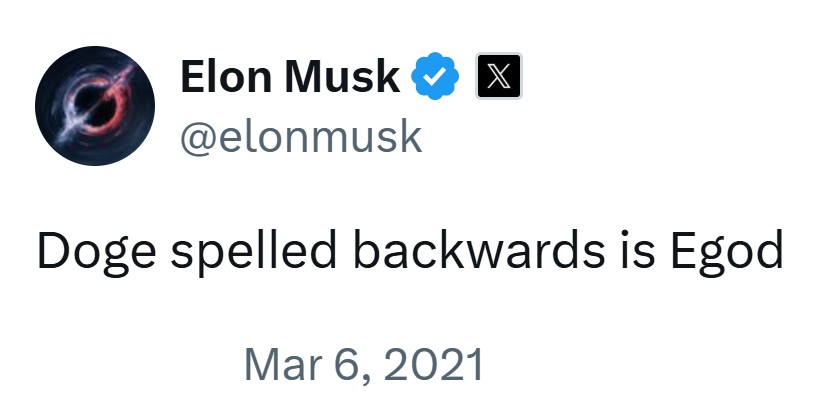
These are statements that can be checked against primary sources: original X posts with URLs and dates, company announcements, peer-reviewed or classical philosophical papers, official transcripts, and reliable contemporaneous reporting. Examples include Musk’s 2021 “Doge spelled backwards is Egod” post, the existence of the Colossus facility in Memphis, Bostrom’s 2003 simulation paper, and the 2025 OpenAI Stargate infrastructure announcement.
2. Documented interpretations and cultural parallels
These are meaningful comparisons that do not claim causation or secret intent: the city of Memphis sharing a name with an ancient Egyptian capital; the word “Colossus” inviting monumental associations; Matrix-derived slang circulating in technology and political discourse; or the philosophical resonance between mind-uploading speculation and older ideas of continued existence after the body.
3. Speculation with insufficient evidence
Claims that a public figure intends to create a digital deity, that unrelated projects form a single hidden program, or that naming coincidences prove a religious agenda remain in this category until primary evidence appears. EGOD.SI treats “digital revival of gods” as an interpretive framework—useful for asking questions—not as a proven statement of anyone’s intentions.
Practical rules
- Quote primary sources whenever possible and preserve dates and URLs.
- Label metaphors as metaphors.
- Prefer “consistent with” over “proves” when evidence is incomplete.
- Update or correct articles when stronger sources become available.
This method does not make the subject less interesting. It makes the investigation more durable, fair, and useful to readers who want to examine the material for themselves.